

Why This Question Come Up?
This question comes up frequently, especially from advisors who are new to the housing wealth conversation. On the surface, it often sounds like a compliance question. Underneath, it is usually an economic one.
If reverse mortgage proceeds can’t be used to purchase financial products, how does an advisor make money by incorporating them?
That’s a fair question. It just needs to be answered honestly and in the right context.
The Actual Rule Advisors Need to Understand
From a consumer standpoint, the rule is straightforward. Once proceeds from a HECM reverse mortgage are disbursed, the homeowner controls the funds. There are no federal restrictions on how that money is ultimately spent. A consumer can choose to use those proceeds however they desire!
From an advisor standpoint, however, the answer is clearly no.
Within the regulatory frameworks of FINRA, state insurance commissioners, broker-dealers, and insurance companies themselves, advisors may not recommend, direct, facilitate, or position reverse mortgage proceeds for the purchase of financial products. That includes securities, annuities, and life insurance.
That line did not appear overnight. It was shaped by early policy intent, market evolution, and very real abuses that followed.

A 26-Year Perspective on How We Got Here
When I entered the industry in 2000, reverse mortgages were far more openly integrated into retirement planning conversations. At the time, a consumer could go to the AARP website, request a reverse mortgage quote, and receive four columns of options: a lump sum, a line of credit, a monthly payment, and a fourth option that would surprise many advisors today, a Single Premium Immediate Annuity.
SPIAs were paying 7, 8, even 9 percent. In that environment, reverse mortgages were not viewed as fringe or last-resort tools. They were discussed alongside pensions, Social Security, and insurance as part of a coordinated retirement income strategy.
That broader view was reinforced by federal policy at the time.
H.R. 5640 and the Original Policy Intent
In December 2000, Congress passed H.R. 5640, the American Homeownership and Economic Opportunity Act of 2000, which became Public Law 106-569, signed on December 27, 2000.
One provision in particular is often overlooked.
Section 201(c) authorized HUD to waive the up-front Mortgage Insurance Premium on an FHA-insured reverse mortgage when the loan proceeds were used exclusively to pay premiums for a qualified long-term care insurance contract.
This detail matters.
First, it confirms that lawmakers viewed housing wealth as a legitimate retirement resource, particularly for managing long-term care risk and supporting aging in place.
Second, the waiver was narrowly constructed. Proceeds had to be used only for qualified long-term care insurance premiums. This was not an open door to investment strategies or leverage. It was a targeted allowance for a protective, insurance-based expense tied directly to longevity risk.
From the outset, Congress drew a distinction between risk-management uses of housing equity and risk-taking financial strategies.
The Shift That Changed Everything
That balance began to unravel around 2003.
SPIA payout rates softened, and fixed indexed annuities entered the market in force. Some were thoughtfully designed and improved client safety. Others came with very large commissions and very long surrender periods.
The guidance to advisors became increasingly clear: do not take a lump sum from a reverse mortgage and immediately lock it up in an annuity. Leave sufficient liquidity and reserves for the client.
Unfortunately, that guidance was not always followed.
There were documented cases where advisors placed nearly 100 percent of a client’s reverse mortgage proceeds into annuity products, leaving no accessible reserve. When health events, home repairs, or emergencies occurred, families were understandably furious. Clients had debt on the home and no liquid safety net.
The Reverse Mortgage Proceeds Protection Act of 2007
Those abuses led to direct federal intervention through S.2490, formally titled the Reverse Mortgage Proceeds Protection Act of 2007.
The bill was introduced to prohibit authorized lenders of home equity conversion mortgages from requiring or conditioning seniors to purchase annuities with the proceeds of a reverse mortgage and to strengthen consumer protections for reverse mortgage borrowers.
While the bill focused on lender behavior, its impact reached far beyond lenders alone. Combined with enforcement actions by NASD (now FINRA), the SEC, Congress, the Senate, and state regulators, it solidified a bright regulatory line.
Reverse mortgages were not to be marketed, positioned, or discussed as funding sources for financial or insurance products.
If Advisors Can’t Sell a Product, How Do They Make Money?
This is where the conversation often goes sideways.
Reverse mortgages are not a commission event for financial advisors. They are a planning lever. And planning levers affect revenue indirectly, not transactionally.
In practice, advisors tend to benefit in four primary ways: The money they manage, The products they sell, The clients they keep, The people those clients refer
1. The Assets They Manage
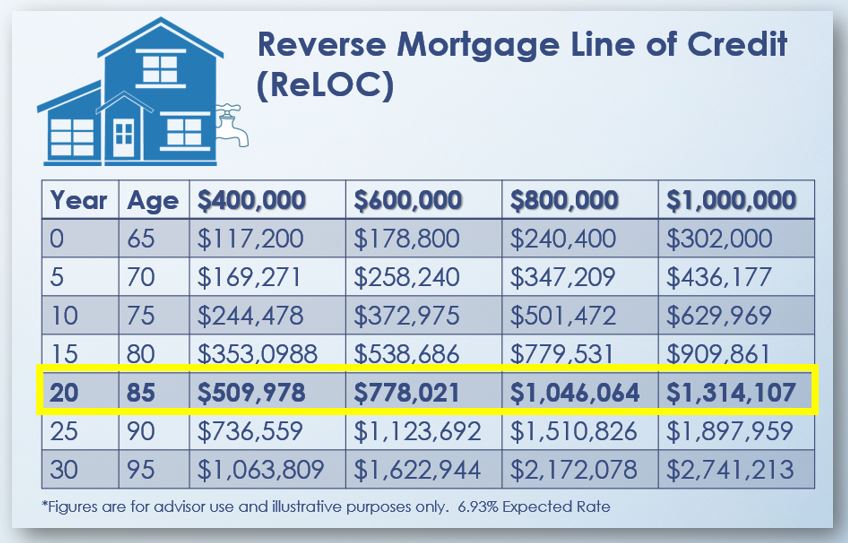
An advisor helps a retiree use a reverse mortgage line of credit to cover spending during a market downturn. Instead of selling investments at depressed values, the portfolio is left intact. When markets recover, assets under management are preserved rather than permanently reduced.
2. The Products They Sell
Reverse mortgages are not used to purchase financial products, but they can improve the conditions under which product decisions are made.
In one case, a client wanted to implement a life insurance strategy for tax planning purposes but did not want to disrupt cash flow or draw from investments. The household was carrying multiple mortgages and loans totaling roughly $12,000 per month in principal and interest payments.
By restructuring the existing debt with a reverse mortgage, those required monthly payments were eliminated. That change improved cash flow without selling investments or using loan proceeds to purchase the policy. The newly freed monthly cash flow could then be redirected toward ongoing insurance premiums in a sustainable and compliant way.
In another situation, a client wanted to move $250,000 out of a volatile investment position and into something more stable but was concerned about maintaining liquidity. To stay comfortable, they initially chose to reposition only $150,000.
After being educated on the growing reverse mortgage line of credit as a liquidity backstop, the client no longer felt the need to keep excess funds exposed to market risk. With that added confidence, they chose to reposition the full $250,000. The reverse mortgage did not fund the transaction. It provided liquidity assurance that allowed the client to make a calmer, more intentional decision.
3. The Clients They Keep
Clients tend to leave advisors when plans break down under stress. Housing wealth can stabilize income, smooth tax spikes, and provide reserves for health or longevity events. When clients feel prepared rather than reactive, trust deepens and long-term relationships are preserved.
4. The People Clients Refer
Clients who feel secure and well advised talk. Advisors who can thoughtfully and compliantly incorporate housing wealth into planning conversations often differentiate themselves from peers who focus solely on investments. That differentiation leads to warmer, more natural referrals over time.
Advisors do not get paid for the reverse mortgage. They get paid because the plan works better.
Where We Landed and Why It Still Matters
Over time, the tone softened. Academic research improved. Product design improved. Planning-based uses of housing wealth gained credibility and acceptance.
But the core concern never disappeared.
Debt should not be used as a sales tool for investment or insurance products.
That is why today’s rules are so clear. A consumer may choose how to use their proceeds. An advisor may not recommend, structure, or suggest a reverse mortgage as a funding source for financial products.
How I Approach This Work
I am a strong advocate for advisors being appropriately compensated for the work, skill, and responsibility they bring to their clients. Good advice has value, and professionals should be paid for delivering it.
I also understand why some advisors initially view a reverse mortgage as a potential funding source. On the surface, it can look like available capital sitting on a balance sheet.
That said, I am intentional about who I choose to work with.
I work best with advisors who are focused on expanding their own expertise and integrating housing wealth into their planning process, not those looking for ways to monetize a transaction through referral fees or product tie-ins.
Not because compensation is wrong, but because chasing transactional income often leads to compromised planning decisions. Using loan proceeds to purchase financial products introduces leverage, reduces liquidity, and shifts risk onto the homeowner at the very stage of life when flexibility matters most.
Reverse mortgages should stand on their own as planning tools. They can reduce portfolio withdrawals, improve tax flexibility, eliminate required monthly mortgage payments, or provide a reserve for health events or longevity risk.
Advisors serve their clients best when housing wealth is treated as a risk-management resource, not as capital to be repositioned. That distinction is where trust is built and where retirees are best protected.
Related Posts:
- Supercharging a Roth IRA Conversion with Reverse Mortgages
- Creating a Long-Term Care Health Plan with Reverse Mortgages
- Social Security’s $195 Billion Overhaul: Reverse Mortgage Insights
What to Do When You Have a Client or Case?
- Go to www.HousingWealthPro.com and request a Housing Wealth Illustration. Give Details in the “Notes” Section including the clients phone # if they would like a Housing Wealth Assessment. You can also
- Schedule a Time to Speak with Me: Click Here

The content of this blog is for financial advisors and professionals only and is not intended for consumer use. Names, cases, and scenarios are fictionalized for illustrative purposes. The opinions expressed here are those of the author alone and do not reflect the views of any affiliated entities or individuals. Don Graves, NMLS #142667.