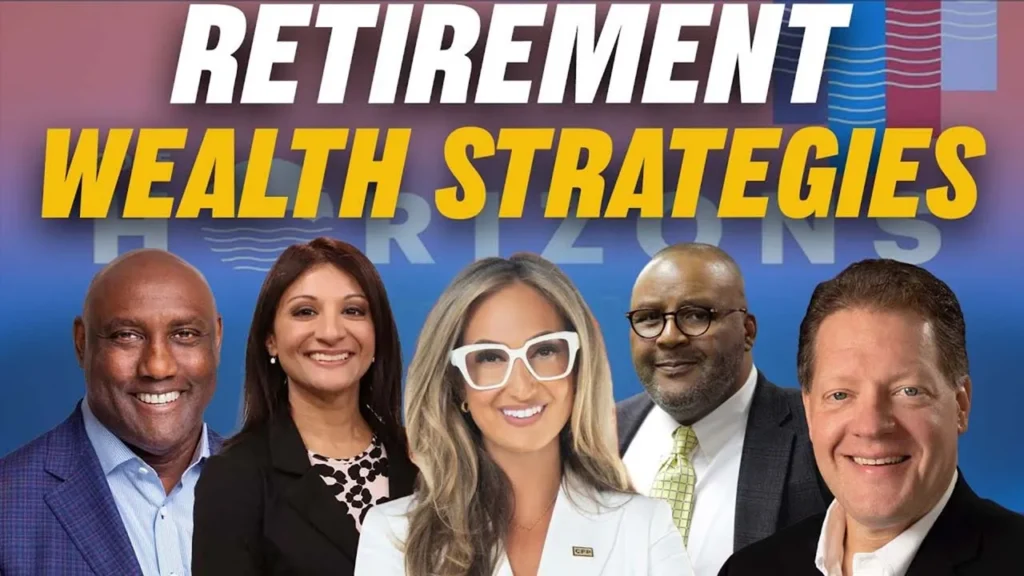
I recently had the opportunity to join Dr. Eric Ludwig, RICP®, on Shares, the podcast of The American College of Financial Services, for a conversation about a subject I have spent much of my career teaching: how housing wealth can become part of a comprehensive retirement income plan.
We covered a lot of ground in about 30 minutes, but the central idea was simple.
For decades, reverse mortgages were often viewed as a loan of last resort. Today, a growing body of retirement income research has helped move the conversation from “Who needs a reverse mortgage?” to a much more useful question:
“What could incorporating housing wealth potentially do for this retirement plan?”
Watch the Conversation
The Questions We Explored
Eric asked some excellent questions that allowed us to move beyond the mechanics of a reverse mortgage and into the planning conversations financial professionals are having every day.
1. How did I get interested in this part of retirement planning?
My introduction to reverse mortgages actually began with skepticism. I wanted to know the “aha, gotcha and fine print” before I would ever consider recommending the concept to anyone.
That research eventually changed the direction of my career.
2. Why are reverse mortgages increasingly showing up in serious retirement income and tax planning conversations instead of being viewed simply as a loan of last resort?
This led to one of the central themes of our conversation: All Available Assets.
Most retirement planning conversations focus on three primary buckets: income, investments and insurance. But for millions of retirees, there is a substantial fourth bucket sitting right in front of us:
Housing wealth.
The question is not whether every client should use it. They shouldn’t. The question is whether advisors should understand what it may be able to do before deciding to exclude it.
3. Why should advisors begin treating housing wealth as a fourth bucket in retirement planning?
Housing wealth can potentially be used to strengthen and lengthen the other resources a retiree is depending upon.
During our conversation, I explained how a reverse mortgage line of credit can create an additional reserve that may be available when other retirement assets are under pressure.
That can become especially important during market downturns, unexpected expenses, periods of high inflation, long-term care events or other situations where taking money from the investment portfolio may not be the preferred choice.
4. Why does the source of retirement income matter so much when we consider taxes and portfolio longevity?
A retiree may have plenty of money and still take money from the wrong bucket at the wrong time.
An additional withdrawal from a tax-deferred account can potentially affect more than the immediate income-tax bill. It may also affect the taxation of Social Security benefits, Medicare IRMAA surcharges and the amount of money that remains invested for the future.
Housing wealth can potentially provide another source of funds to consider alongside taxable, tax-deferred and tax-free assets.
5. How can housing wealth support a Roth conversion strategy without adding additional tax pressure in the year of the conversion?
This is one of my favorite planning conversations.
A Roth conversion can make tremendous sense for the right client, but someone still has to pay the resulting tax bill.
We discussed how a reverse mortgage line of credit may provide a source for paying those taxes without using a portion of the converted assets themselves. That creates another option for the client’s tax professional and financial advisor to evaluate as part of a coordinated Roth conversion strategy.
One Idea I Hope Advisors Take Away
I said something during the podcast that summarizes my approach:
Not everyone is a candidate for a reverse mortgage, but nearly everyone approaching retirement with meaningful home equity is a candidate for the conversation.
Your clients may never walk into your office and say, “Tell me about reverse mortgages.”
But they are already asking questions like:
- What happens if I run out of money?
- Where should we get money for a major unexpected expense?
- How do we protect the portfolio during a bad market?
- How will we pay for long-term care?
- Can we reduce taxes in retirement?
- Can we leave more of our investments growing?
- How do we create another source of liquidity later in retirement?
Those are housing wealth conversations, even when nobody uses the words reverse mortgage.
That is why I believe housing wealth deserves a seat at the retirement planning table.
Want to Go Deeper?
If this conversation raises questions about how housing wealth might fit into the retirement plans you are designing for clients, my Housing Wealth Masterclass provides a more detailed introduction to the strategies and planning opportunities.
Visit HousingWealthMasterclass.com to watch the Masterclass.
Those questions track Eric’s progression in the interview, including his specific questions about the fourth bucket, tax-efficient retirement income and using housing wealth alongside a Roth conversion strategy.
I would keep the blog at about this length and let the video be the main event. The questions act almost like chapter markers and give advisors a reason to watch rather than giving away every detail in the written article.
What to Do When You Have a Client or a Case?
- Go to www.HousingWealthPro.com and request a Housing Wealth Illustration. Give Details in the “Notes” Section including the clients’ phone # if they would like a Housing Wealth Assessment. You can also
- Schedule a Time to Speak with Me: Click Here

Related Articles:
- How Did Reverse Mortgages Get Such a Bad Reputation?
- Morgan Stanley and Charles Schwab Say It’s Time to Rethink the Role of Home Equity in Retirement
Reverse Mortgages Are Global: 24 Countries Beyond the U.S. Are Embracing Housing Wealth
The content of this blog is for financial advisors and professionals only and is not intended for consumer use. Names, cases, and scenarios are fictionalized for illustrative purposes. The opinions expressed here are those of the author alone and do not reflect the views of any affiliated entities or individuals. Don Graves, NMLS #142667.